1. When you want to change lanes, you should never:
2. If you are driving and the rear end of your car starts skidding to the left, you should:
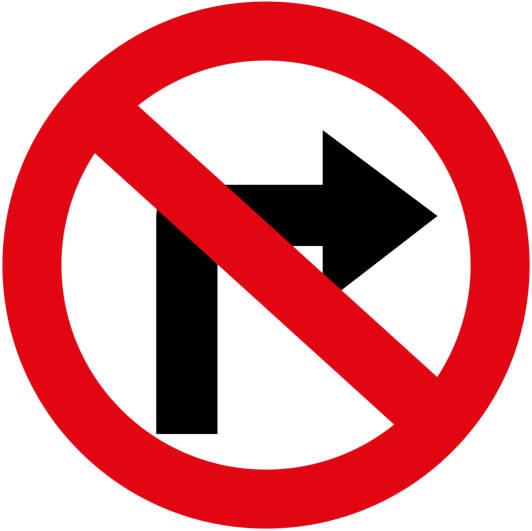
3. This sign means:
4. The best way to avoid a dangerous situation while driving is to:
5. If a child is about to run into the street, you should:
6. Which of the following describes the thinking of defensive drivers?
7. When entering the interstate, check for a gap in traffic in the nearest lane, adjust your speed to match traffic, signal, and:
8. When stopping on snow or ice, drivers who are operating vehicles equipped with an Anti-Lock Braking System (ABS) should:
9. There are two traffic lanes moving in your direction. You are driving in the left lane and many vehicles are passing you on the right. If the driver behind you wishes to drive faster, you should:
10. You should always travel:
11. Excessive speed:
12. Your license can be suspended if you are under 21 and drive with a blood alcohol level of:
13. If you are driving on a highway next to a single broken white line marking:
14. When approaching an intersection with a flashing red light, you must:
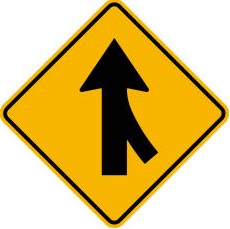
15. This sign means:
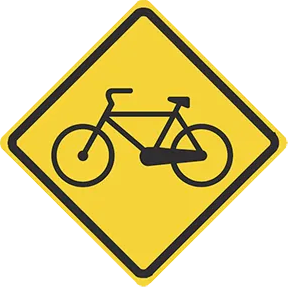
16. What does this road sign mean?
17. If you park facing uphill where there is no curb, set the parking brake and:
18. Broken yellow lines are used on streets and highways to:
19. Water on the road can cause a vehicle to hydroplane. Your car may hydroplane at speeds as low as:
20. When you are merging onto the freeway, you should be driving:
21. When changing lanes:
22. When using a roundabout, drivers should:
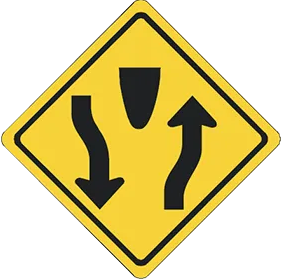
23. This sign means:
24. Highway pavement will be particularly treacherous and most slippery:
25. To avoid glare from the headlights of an approaching car:
26. If you have trouble seeing other vehicles because of dust or smoke blowing across the roadway, you should drive more slowly and turn on your:
27. To be able to turn quickly, your hands must be:
28. Which of these statements is true about roadwork zones?
29. Give the right-of-way to any pedestrian who is:
30. In rainy weather, you should be most careful when turning or stopping:
31. If your wheels drop off the roadway or pavement edge, you should:
32. You are preparing to exit the interstate. When should you start reducing your speed?
33. At intersections, crosswalks, and railroad crossings, you should always:
34. If you miss your exit on the freeway, you should not:
35. This sign means:
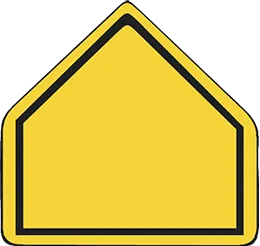
36. Stopping distances and the severity of collisions:
37. You may cross double yellow lines to pass another vehicle if the:
38. You are approaching an intersection where a traffic signal is displaying a steady yellow light. If you have not already entered the intersection, you should:
39. When driving at night on a dimly lit street, you should:
40. While driving on a roadway with a single broken white centerline: