Dmv Permit Test 20

By Teacher David Global  •  Free

1. When you see an emergency vehicle approaching while using its flashing lights, you must:
A. Maintain your speed and stay in your lane until the vehicle has passed.
B. Move into the right lane and drive slowly until the vehicle has passed.
C. Pull over to the curb or edge of the road and stop until the vehicle has passed.
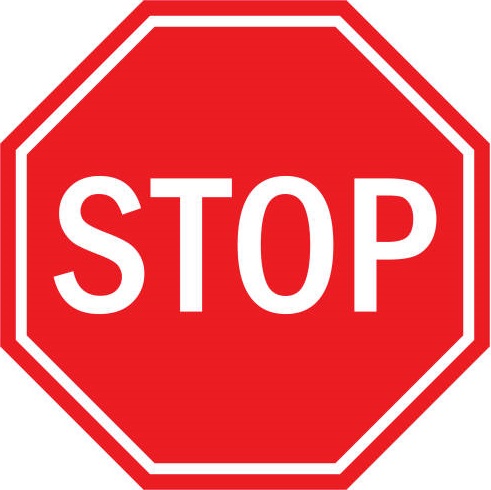
2. This road sign means:
A. Drive with caution and be ready to stop.
B. You must come to a complete stop.
C. Stop, if necessary.
3. In traffic moving at 50 to 55 mph, you are least likely to have an accident if you:
A. Drive a few miles per hour faster than most other vehicles.
B. Stay within that speed range.
C. Drive a few miles per hour slower than most other vehicles.
4. As your speed increases, it is important to:
A. Turn on your headlights.
B. Look well ahead of your vehicle.
C. Change lanes frequently.
5. You should increase the distance between your vehicle and the vehicle ahead when you:
A. Are following a small passenger vehicle.
B. Are being tailgated by another driver.
C. Are driving more slowly than the posted speed limit.
6. At a red traffic light with a green arrow, you may proceed in the direction of the arrow if:
A. You first come to a complete stop.
B. You wait until the light changes.
C. You are in the proper lane and the roadway is clear.
7. If a motorist sees pedestrians in an upcoming crosswalk, what should the motorist do?
A. Continue ahead. The motorist has the right-of-way.
B. Wait for the pedestrians to cross the street.
C. Pull to the right and go around the pedestrians.
8. When parking next to a curb, you should use your turn signals:
A. Only when pulling away from the curb.
B. When pulling next to, but not away from, the curb.
C. When pulling next to or away from the curb.
9. You can drive off the road to pass another vehicle:
A. If the vehicle ahead is turning left.
B. If there are two or more lanes traveling in your direction.
C. Under no circumstances.
10. Which of these statements is true about roadwork zones?
A. Fines are the same for violations committed in work zones as they are under normal traffic conditions.
B. You must "Slow for the Cone Zone."
C. Slow down only if you think workers are present.
11. When passing on the left of a vehicle, it is safe to move back into the right lane:
A. After about three seconds.
B. When you can no longer see the vehicle over your right shoulder.
C. When you can see the front of the vehicle in your rearview mirror.
12. A steady green traffic light at an intersection means:
A. Increase your speed.
B. Adjust your mirrors.
C. You may continue through the intersection at a safe and reasonable speed, if it is clear to do so.
13. To see objects in their blind spot when changing lanes, drivers should check:
A. Only the left outside mirror.
B. Over their left or right shoulder.
C. Only the inside rearview mirror.
14. If your car's suspension is bad, it can cause:
A. Vehicle control problems.
B. Squealing brakes.
C. Slack in the steering.
15. A broken yellow line down the center of a road indicates that:
A. A construction zone is ahead.
B. Passing is not permitted from either direction.
C. Passing is permitted from either direction.
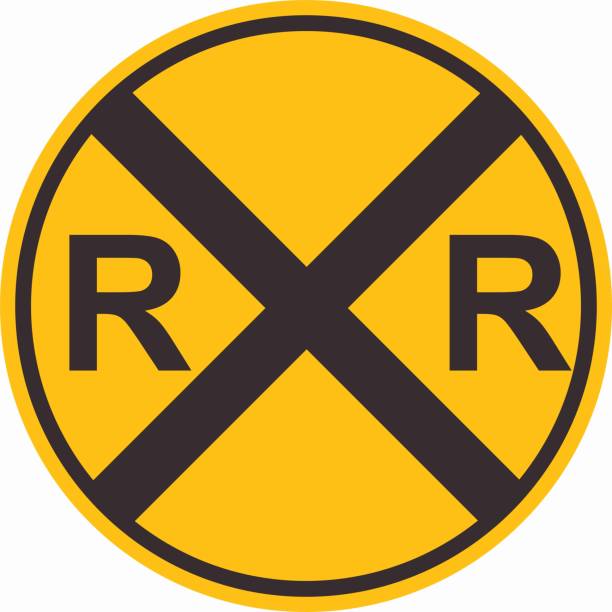
16. When you see this sign, you:
A. Are approaching a railroad crossing and should prepare to stop.
B. Will always stop at the upcoming railroad crossing.
C. Should stop and wait for a signal before crossing the railroad tracks.
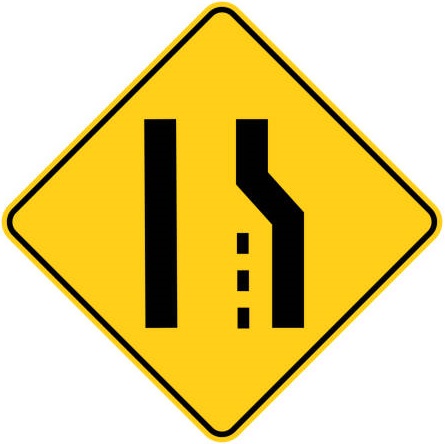
17. This road sign means:
A. Highway entrance ramp.
B. Road widens.
C. Right lane ends.
18. When you drive through a construction zone, you should:
A. Stop to watch the workers.
B. Decrease your following distance.
C. Pass the construction zone carefully and not “rubberneck."
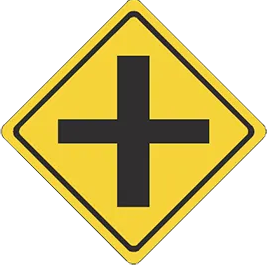
19. This road sign means:
A. Hospital.
B. Upcoming intersection.
C. Railroad crossing.
20. Before you enter an intersection, you should look to your:
A. Left, your right, then your left again.
B. Right.
C. Left.
21. Extra space in front of a large truck is needed for:
A. Other drivers to merge onto the freeway.
B. The truck driver to stop the vehicle.
C. Other drivers when they want to slow down.
22. It is very foggy. You should slow down and:
A. Turn on your emergency flashers.
B. Turn your lights to their high beam setting.
C. Turn your lights to their low beam setting.
23. When double solid yellow lines separate lanes of traffic:
A. Passing is permitted from the left.
B. Passing is permitted from the right.
C. Passing is not permitted from either direction.
24. When you are merging onto the freeway, you should be driving:
A. At or near the speed of traffic on the freeway.
B. Five to 10 mph slower than the speed of traffic on the freeway.
C. The posted speed limit for freeway traffic.
25. If a child is riding a bicycle near your vehicle:
A. Beep your horn.
B. Expect the child to be in total control of the bicycle.
C. Expect the unexpected.
26. You are approaching an intersection at the posted speed limit when the signal turns yellow. You should:
A. Slow down and proceed through the intersection without caution.
B. Speed up to cross the intersection before the light turns red.
C. Stop before entering the intersection, if you can do so safely.
27. If you plan to pass another vehicle, you should:
A. Not assume the other driver will make space for you to return to your lane.
B. Assume the other driver will let you pass if you use your turn signal.
C. Assume the other driver will maintain a constant speed.
28. You are crossing an intersection and an emergency vehicle is approaching while using its siren and flashing lights. You should:
A. Stop immediately in the intersection until it passes.
B. Pull to the right of the intersection and stop.
C. Continue through the intersection, pull to the right, and stop.
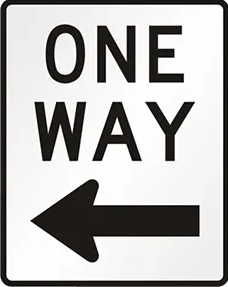
29. This road sign means:
A. No right turn.
B. Drive only in the direction of the arrow.
C. Curve ahead.
30. This sign means:
A. Do not enter.
B. Stop ahead.
C. Roadwork or maintenance is present.
31. When a school bus is stopped ahead on your side of the road with its red lights flashing, you must:
A. Slow to a speed no faster than 10 mph.
B. Stop until the lights stop flashing.
C. Change lanes and pass cautiously.
32. If your vehicle starts to lose traction because of water on the road, you should:
A. Drive at a constant speed to gain better traction.
B. Apply the brakes firmly to prevent your vehicle from sliding.
C. Slow down gradually and not apply the brakes.
33. Motorcycles, scooters, and mopeds are not easy to see; therefore, you should:
A. Slow down when driving.
B. Make constant visual checks.
C. Share a lane with a motorcycle.
34. To pass on a two-lane road, you should:
A. Sound your horn as you pass.
B. Flash your headlights as you pass.
C. Judge the distance to any oncoming vehicles.
35. At an intersection with stop signs on all corners, yield the right-of-way to any driver:
A. On your left.
B. Who arrived before you.
C. Across from your vehicle.
36. If your vehicle has a mechanical problem:
A. Signal and pull into the slow lane.
B. Stop in your lane and put on your hazard lights.
C. Put on your hazard lights and pull off the road.
37. If you approach a stopped school bus that has its lights flashing and signal arm extended, you should:
A. Stop.
B. Proceed at 15 mph if no children are present.
C. Proceed at normal speed, but watch for children.
38. If you see orange construction signs and cones on a freeway, you must:
A. Slow down because the lane ends ahead.
B. Be prepared for workers and equipment ahead.
C. Change lanes and maintain your current speed.
39. Where is it safe to pass another vehicle?
A. Within an intersection where there are no oncoming vehicles
B. Wherever signs and/or pavement markings permit passing
C. Within a curve where there are no oncoming vehicles
40. What does a traffic signal with a yellow left arrow indicate?
A. Drivers should prepare to yield to oncoming traffic.
B. The protected left turn is about to end.
C. Both of the above.