Dmv Permit Test 2

By Teacher David Global  •  Free

1. What is the only effective way to remove alcohol from the body?
A. Drink strong coffee.
B. Wait.
C. Take a cold shower.
2. "No passing zone" signs tell drivers:
A. To speed up slightly.
B. That it is not safe to pass.
C. To maintain a steady speed.
3. When being passed by another vehicle:
A. Brake hard.
B. Maintain a constant speed.
C. Speed up.
4. The amount of alcohol in the blood is referred to as:
A. Implied consent (IC).
B. Blood alcohol concentration (BAC).
C. Rate of alcohol consumption (RAC).
5. At dawn or dusk and in rain or snow, it can be hard to see and be seen. A good way to let other drivers know you are there is to turn:
A. Up the instrumental panel lights.
B. On your parking lights.
C. On your headlights.
6. At a school crossing sign, you should:
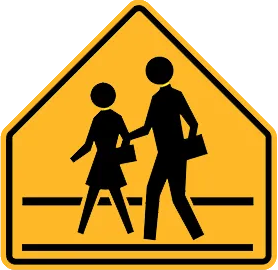
A. Always stop, whether there is a stop sign or not.
B. Watch for children and be ready to stop.
C. Always sound your horn when you see children.
7. It is unlawful to:
A. Pass another vehicle in any marked no passing zone.
B. Pass another vehicle over a railroad crossing.
C. Both of the above.
8. If your vehicle begins to skid, you should:
A. Ease up on the gas pedal.
B. Brake as hard as possible.
C. Turn off the ignition.
9. The maximum posted speed limit should be driven only:
A. During the night.
B. During the day.
C. Under ideal conditions.
10. If worried, nervous, or angry, drivers:
A. Should let someone else drive.
B. Are more in touch with their senses and will be more precise drivers.
C. Will drive no differently than they would if they were thinking clearly.
11. Only ____ can reduce blood alcohol content (BAC) and alcohol's effects on the body.
A. Drinking caffeine
B. Eating foods high in fat
C. Time
12. Hydroplaning occurs when tires ride on a thin film of water instead of on the surface of the road. To prevent hydroplaning in rainy weather, you should:
A. Put on your cruise control to maintain a constant speed.
B. Decrease your speed.
C. Move to the shoulder of the road as soon as it starts to rain.
13. Interstate driving requires drivers to:
A. Have the ability to safely drive at increased speeds.
B. Be constantly alert.
C. Both of the above.
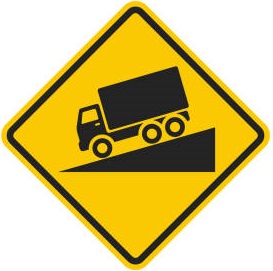
14. This road sign means:
A. Intersection ahead.
B. Merging traffic.
C. Steep hill ahead.
15. An orange-colored sign like this means:
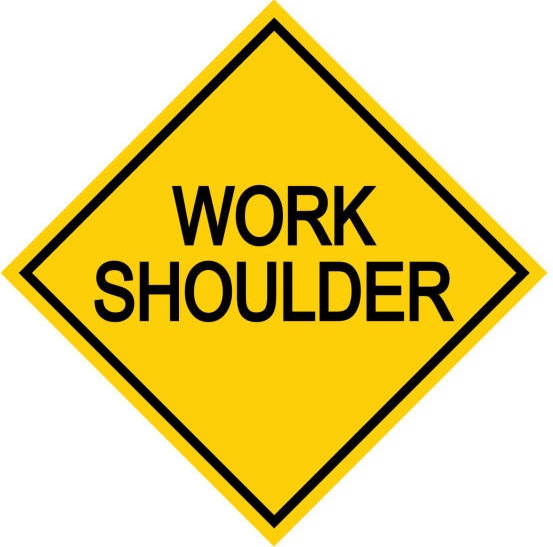
A. There is roadwork ahead.
B. You must change lanes ahead.
C. There is a detour ahead.
16. Use your headlights on rainy, snowy, or foggy days:
A. To keep your engine warm.
B. So others can see your vehicle.
C. To warn others of bad weather conditions.
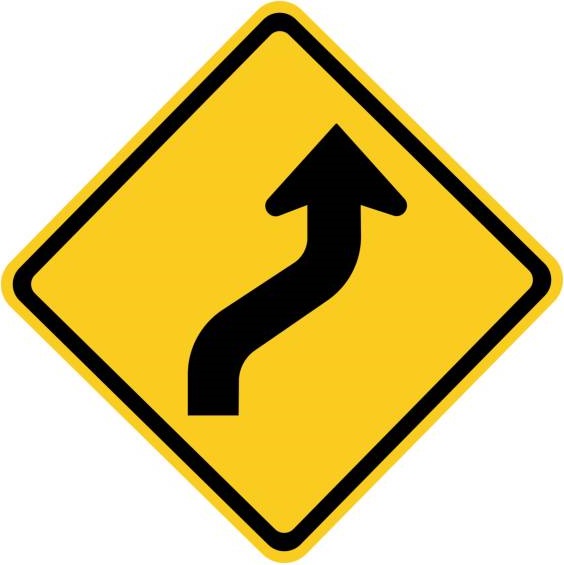
17. This road sign means:
A. Road construction ahead.
B. The road ahead curves left then right.
C. The road ahead curves right then left.
18. When changing lanes:
A. Check your side mirror and look over your shoulder to make sure the lane is clear.
B. Check the inside rearview mirror.
C. Slow down.
19. When a pedestrian guided by a dog or carrying a white cane is crossing the street:
A. You must always yield the right-of-way.
B. You must tell them where to cross the street.
C. You only have to yield the right-of-way if you are at a corner.
20. If a traffic signal light is green and a police officer signals for you to stop, you should:
A. Obey the officer.
B. Obey the traffic signal.
C. Do what the vehicle in front of you does.
21. When driving in fog, it is best to drive with:
A. High beam headlights.
B. Low beam headlights.
C. Four-way flashers.
22. When turning left at an intersection:
A. You should always yield to oncoming traffic and pedestrians.
B. Oncoming traffic and pedestrians should yield to you.
C. You should never yield to oncoming traffic and pedestrians.
23. Construction zone signs are generally:
A. Square or rectangular with white and red coloring.
B. Round or octagonal with black and yellow coloring.
C. Diamond-shaped or rectangular with orange and black coloring.
24. This sign indicates that the road ahead:
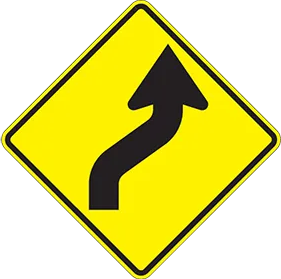
A. Turns sharply right, then left.
B. Curves right, then left.
C. Curves right.
25. What should you do when an emergency vehicle is approaching you while using its flashing red or blue lights?
A. Pull over to the side of the road and come to a complete stop.
B. Continue driving, but try to stay out of its way.
C. See if you can reach your destination before the emergency vehicle catches up to you.
26. What should you do when approaching a pedestrian who is being led by a guide dog or using a white cane?
A. Honk so they know to clear the way.
B. Yield the right-of-way.
C. Swerve quickly around them.
27. To avoid carbon monoxide poisoning, a driver should:
A. Have their exhaust system checked regularly to be sure there are no leaks.
B. Keep their engine turned off when their vehicle is enclosed in a garage.
C. Both of the above.
28. If you become drowsy while driving, you should:
A. Try to fight it.
B. Take a break.
C. Take some caffeine pills.
29. You want to make a right turn at the corner. A pedestrian with a guide dog is at the corner ready to cross the street in front of you. Before making your right turn, you should:
A. Turn off your engine until the person crosses the street.
B. Tell the pedestrian when to cross the street.
C. Wait until the person crosses the street.
30. If a vehicle is equipped with airbags:
A. Seat belts should still be worn.
B. Seat belts do not need to be worn.
C. Seat belts should be worn behind the back.
31. It is more dangerous to drive at night than during the day because:
A. You cannot see as far ahead at night.
B. The road is always more slippery at night.
C. Your reaction time is slower at night.
32. To help others see you when daylight begins to fade, you should use your:
A. Parking lights.
B. Low beam headlights.
C. Emergency flashers.
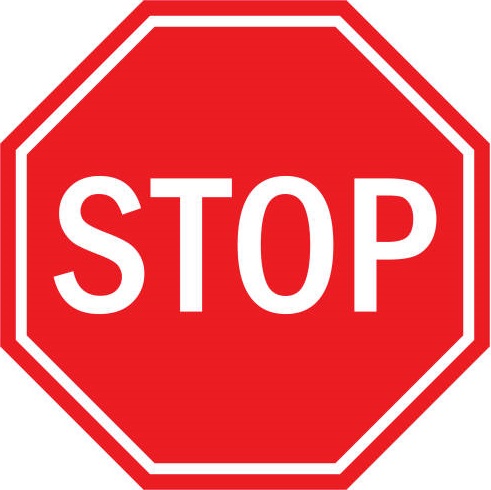
33. What does this road sign mean?
A. Slow down and prepare to stop if cars are approaching you.
B. Come to a full stop then proceed when it is safe to do so.
C. Proceed carefully through the intersection, not always stopping.
34. A solid yellow arrow on a traffic signal means:
A. You should speed up so you can make the turn before the light changes.
B. You do not need to signal to turn from the indicated lane.
C. You should prepare to stop and yield the right-of-way to oncoming traffic.
35. The best thing to do if you become tired while driving is to:
A. Stop to rest or change drivers.
B. Drink coffee.
C. Open a window.
36. Regulatory signs are usually ____ and should always be obeyed.
A. White
B. Blue
C. Green
37. Excessive speed:
A. Saves time so you can get to your destination more quickly.
B. Helps you maneuver around obstacles.
C. Increases the likelihood of serious bodily injury and death.
38. Only ____ can lower blood alcohol concentration (BAC) and reduce alcohol's effects on a body.
A. Drinking caffeine
B. Eating foods high in fat
C. Time
39. When a school bus is stopped ahead on your side of the road with its red lights flashing, you must:
A. Slow to a speed no faster than 10 mph.
B. Stop until the lights stop flashing.
C. Change lanes and pass cautiously.
40. What is an important step in turning?
A. Check traffic in all directions.
B. Increase your speed.
C. Always move to the left lane.