Dmv Permit Test 19

By Teacher David Global  •  Free

1. Hydroplaning occurs when tires ride on a thin film of water instead of on the surface of the road. To prevent hydroplaning in rainy weather, you should:
A. Put on your cruise control to maintain a constant speed.
B. Decrease your speed.
C. Move to the shoulder of the road as soon as it starts to rain.
2. When may you legally drive around or under a railroad crossing gate?
A. Never.
B. When you can see clearly in both directions.
C. When the warning lights are not flashing.
3. Vehicles are required to be covered by liability insurance:
A. Only when used on an interstate.
B. Only when operated by a minor.
C. At all times.
4. Regulatory signs are usually ____ and should always be obeyed.
A. White
B. Blue
C. Green
5. A steady yellow traffic signal light is a warning that the light is about to change to red. If you are already within the intersection when a green light changes to yellow, you should:
A. Stop.
B. Continue moving and clear the intersection safely.
C. Increase your speed so as not to cause an accident.
6. When approaching an intersection controlled by a flashing yellow light, you must:
A. Come to a complete stop at the intersection.
B. Maintain your normal speed.
C. Slow down and proceed with caution.
7. Use your headlights on rainy, snowy, or foggy days:
A. To keep your engine warm.
B. So others can see your vehicle.
C. To warn others of bad weather conditions.
8. Double solid yellow lane markings mean that:
A. Neither lane may pass.
B. Both lanes may pass.
C. The lane to the right may pass.
9. You must yield the right-of-way to an emergency vehicle that is using its siren and flashing lights by:
A. Driving as closely to the right edge of the road as possible and stopping.
B. Moving into the right lane and driving slowly until it has passed.
C. Stopping immediately, even if you are within an intersection.
10. Reaction time is slower after:
A. Drinking alcohol.
B. Sleeping.
C. Working hard.
11. A green traffic signal indicates that approaching drivers should:
A. Come to a complete stop.
B. Increase their speed to quickly clear the intersection.
C. Continue driving straight through the intersection, turn left, or turn right.
12. After you have passed a vehicle moving in the same direction, it is safe to move back into the right lane:
A. After about three seconds.
B. When you can no longer see the passed vehicle over your right shoulder.
C. When you can see the entire front of the passed vehicle in your rearview mirror.
13. If there is a deep puddle on the road ahead, you should:
A. Maintain the posted speed to make it through the water.
B. Avoid the puddle if possible.
C. Shift into neutral as you drive through the water.
14. If you are driving and the rear end of your car starts skidding to the left, you should:
A. Steer to the right.
B. Steer to the left.
C. Tap your brakes lightly and shift into neutral.
15. To help avoid skidding on slippery surfaces, you should:
A. Shift to a lower gear after starting down a steep hill.
B. Speed up to enter curves and slow down to exit them.
C. Slow down before entering curves and intersections.
16. When a school bus is picking up or dropping off children, you must:
A. Stop, regardless of your direction of travel.
B. Stop if you are driving in the same direction.
C. Slow down and be prepared to stop.
17. A solid yellow arrow on a traffic signal means:
A. You should speed up so you can make the turn before the light changes.
B. You do not need to signal to turn from the indicated lane
C. You should prepare to stop and yield the right-of-way to oncoming traffic.
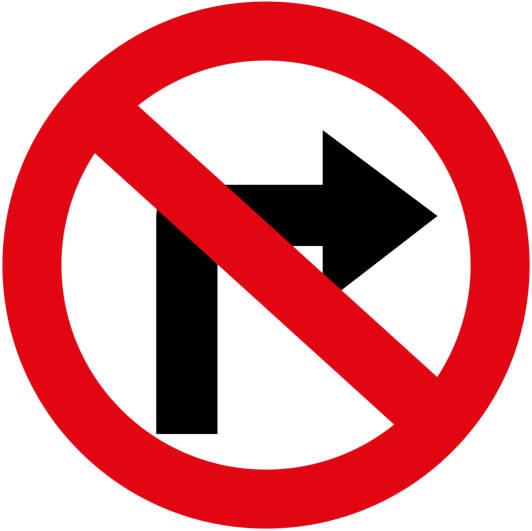
18. This sign means:
A. No right turn.
B. You must turn right.
C. Watch for traffic on your right.
19. You want to park downhill on a two-way road and there is no curb. Which way do you turn your front wheels?
A. Straight ahead
B. Right, toward the side of the road
C. Left, toward the center of the road
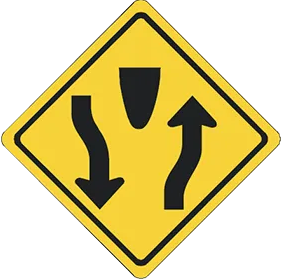
20. This sign means:
A. Divided highway.
B. Railroad warning.
C. No passing zone.
21. When crossing a sidewalk to enter traffic from an alley or driveway, drivers should:
A. Stop only if pedestrians are on the sidewalk.
B. Stop before driving onto the sidewalk or sidewalk area.
C. Expect pedestrians on the sidewalk to yield the right-of-way.
22. When approaching a school bus stopped with its stop arm extended and red lights flashing, drivers should:
A. Come to a complete stop and wait to proceed.
B. Honk their horn before passing the bus on its left.
C. Continue driving when they think most kids are probably done exiting the bus.
23. A broken yellow line beside a solid yellow line indicates that passing is:
A. Permitted from the side next to the solid yellow line.
B. Not permitted from either direction.
C. Permitted from the side next to the broken yellow line.
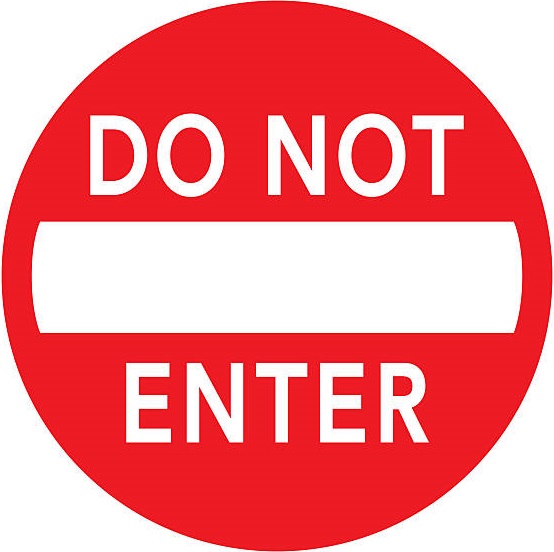
24. This sign means:
A. Do not enter.
B. Yield the right-of-way.
C. Reserved parking for persons with disabilities.
25. Which of these is a safe driving technique?
A. Using your high beam lights in the fog.
B. Staring at the road ahead of your vehicle.
C. Checking your rearview mirrors frequently.
26. Posters and signs on car windows:
A. Are a fun way to personalize your vehicle.
B. Are prohibited by state law if they obstruct a driver's view of the road.
C. Are allowed only if they do not contain offensive language.
27. If you become drowsy while driving, you should:
A. Try to fight it.
B. Take a break.
C. Take some caffeine pills.
28. When parking your vehicle on any hill:
A. One of your rear wheels should touch the curb.
B. Use your parking brake and leave the vehicle in "park."
C. Your front wheels should be parallel to the road, if there is no curb.
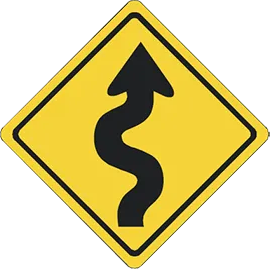
29. This road sign means:
A. Sharp turn to the right ahead.
B. Upcoming sharp left and right turns.
C. Winding road ahead.
30. If your car becomes disabled while on the highway, you should:
A. Stop in the right lane.
B. Park with all four wheels off the traveled highway, if possible.
C. Stop where you are.
31. If a road is slippery, maintain a following distance that is:
A. No different than normal.
B. Farther from the car ahead than normal.
C. Closer to the car ahead than normal.
32. You may pass a vehicle when:
A. You are on a hill or curve.
B. You are on a road with a solid line next to your lane.
C. You are on a road with a broken line next to your lane.
33. If bad weather makes it difficult for you to see clearly, you should:
A. Speed up to get off the road quickly.
B. Drive in the lane closest to oncoming traffic.
C. Increase your following distance.
34. "No passing zone" signs tell drivers:
A. To speed up slightly.
B. That it is not safe to pass.
C. To maintain a steady speed.
35. If you are continually being passed on the right and the left while driving in the center lane of an expressway, you should:
A. Stay in the center lane.
B. Move to the lane on your right.
C. Move to the lane on your left.
36. You see pedestrians near the road. You should:
A. Sound your horn and maintain your speed.
B. Speed up to clear the area quickly.
C. Slow down and pass with caution.
37. When involved in a collision, you should:
A. Avoid moving the injured unless absolutely necessary.
B. Move the injured to their desired location.
C. Insist the injured are fine without immediate medical attention.
38. What should you do when an emergency vehicle is approaching you while using its flashing red or blue lights?
A. Pull over to the side of the road and come to a complete stop.
B. Continue driving, but try to stay out of its way.
C. See if you can reach your destination before the emergency vehicle catches up to you.
39. There are two traffic lanes moving in your direction. You are driving in the left lane and many vehicles are passing you on the right. If the driver behind you wishes to drive faster, you should:
A. Stay in your lane so you don't impede the flow of traffic.
B. Drive onto the left shoulder to let the other vehicles pass.
C. Move into the right lane when it is safe.
40. When you are behind a motorcycle, you should:
A. Be ready to use your horn.
B. Drive more slowly.
C. Allow a larger following distance.