
Vehicle Construction And Controls
VEHICLE CONSTRUCTION
Chassis
The chassis is the main structural framework of the vehicle.
It supports all major components such as the engine, transmission, suspension, wheels, and body.
Body
The body is the external shell of the vehicle.
It protects occupants and gives the vehicle its shape.
It includes: Doors, roof, boot (trunk), bonnet (hood)

Engine
The engine is the power unit of the vehicle.
It converts fuel into mechanical energy to move the vehicle.
Most cars use: Petrol engines, diesel engines ,hybrid or electric motors

Transmission system
This system transfers power from the engine to the wheels.
It includes: Gearbox (manual or automatic), Clutch (manual), Differential, Driveshaft

Suspension system
Suspension absorbs shocks from the road and provides stability.
It includes: Springs, shock absorbers, control arms

Braking system
The braking system slows or stops the vehicle.
Types include: Hydraulic brakes, Disc and drum brakes, ABS (Anti-lock Braking System)

Steering system
Allows the driver to control the direction of the vehicle.
Common types: Rack-and-pinion steering, power steering (hydraulic or electric)

Electrical system
Provides power for: Lights, indicators, wipers, battery, charging system (alternator)

VEHICLE CONTROLS
FOOT CONTROLS
Accelerator (Gas Pedal): Increases engine speed and makes the vehicle move faster.
Brake Pedal: Slows or stops the vehicle and should be used smoothly to avoid skidding.
Clutch Pedal (Manual cars only): Disconnects the engine from the transmission to allow smooth gear changes.

HAND CONTROLS
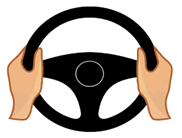
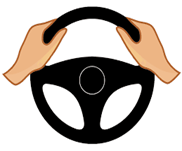
Steering wheel
Controls the direction of the vehicle.
Hands should be at 10 and 2 or 9 and 3
Gear lever
Manual: Selects gears (1, 2, 3, 4, 5, R).

Automatic: P, R, N, D, S, L modes.

Handbrake / parking brake
Prevents the vehicle from rolling when parked.
Used during hill starts in manual cars.

Indicator lever
Activates left or right signal lights.
Usually operated by the left hand.

Wiper and washer controls: Clean the windscreen for visibility during rain or dust.

Headlight switch: Controls dipped beam, full beam, and parking lights.

Horn: Used to warn other road users of your presence.

Ignition switch / start button: Starts the engine.


DASHBOARD INSTRUMENTS
Speedometer – Shows vehicle speed.

Fuel Gauge – Shows amount of fuel in the tank.

Temperature Gauge – Monitors engine temperature.

Odometer – Shows total distance the vehicle has travelled.

Warning Lights
Oil pressure

Battery

ABS light

Engine check light

SAFETY FEATURES
Modern vehicles include various features to protect occupants:
Seat belts

Airbags

Rear-view and side mirrors


Crumple zones

Traction control

ABS & ESC (Electronic Stability Control)
